Sarees are threads that connect us to people, places, and stories long before our time.
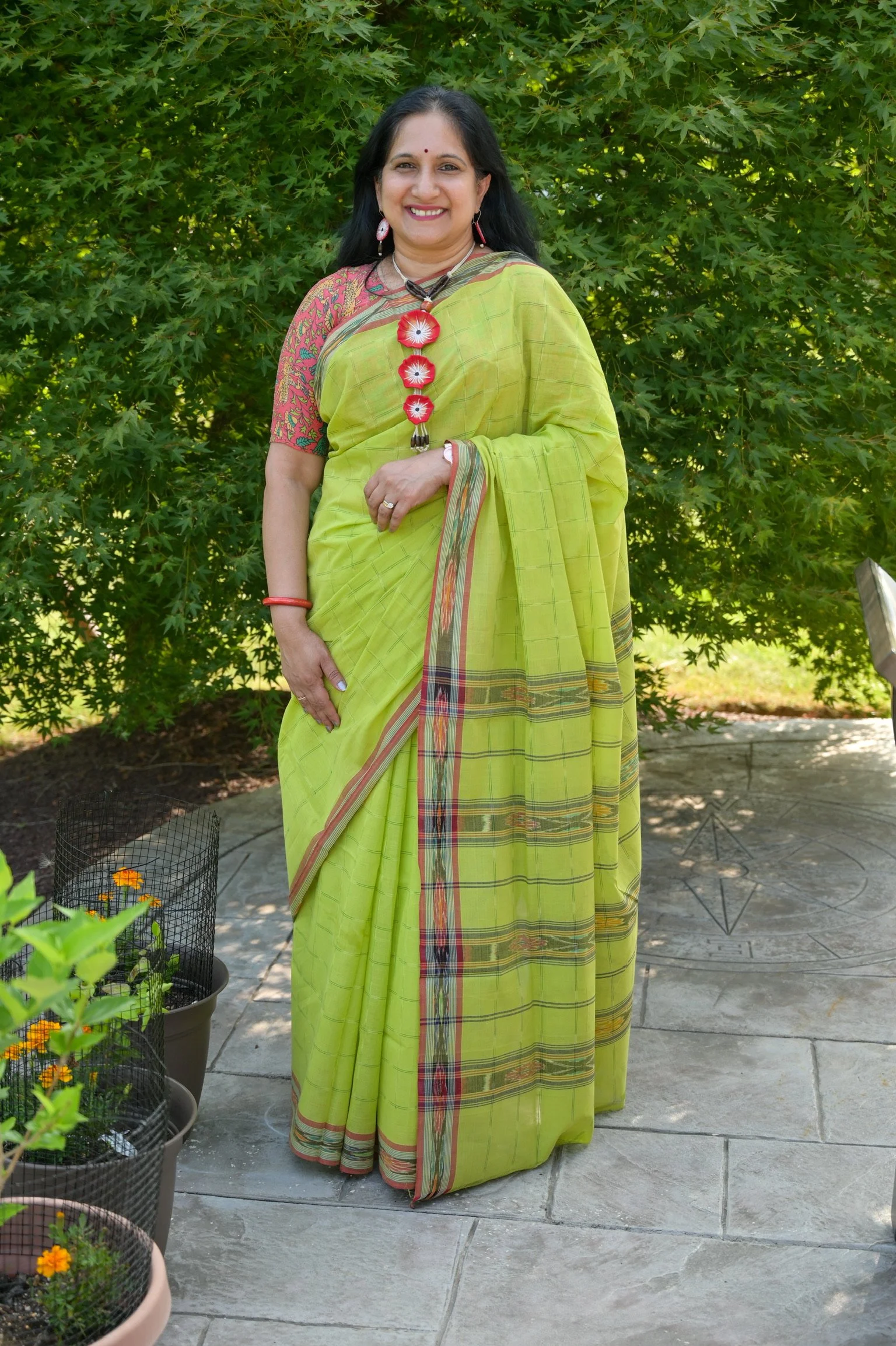
My maternal grandparents lived in a small village just outside Tiruchirappalli, Tamil Nadu, a village that once stood at the heart of a vibrant handloom region. My amma often shares stories of those days. During my grandfather’s time, weavers from Manamedu, Woraiyur, and neighboring weaving clusters would travel from village to village carrying bundles of freshly woven sarees, mostly cotton. Sometimes they came by bullockcart, sometimes by bicycle, but always with the pride of their craft woven into every thread.
There were no showrooms and very few middlemen. Weaver and wearer knew each other. Women would gather on my thatha's verandah, choosing the sarees that would become part of theireveryday lives.
On a recent trip to India, my sister and I visited a few weavers' homes around Trichy . The gentle clatter of the looms, the patience in every movement, and the generations of skill passed from parent to child made time seem to standstill. One of the weavers told us that his father, too, would take freshly woven sarees to neighboring villages on his bicycle. In that moment, the stories I had grownup hearing suddenly felt real.
Wearing a cotton saree with ikat borders from @cooptex, woven in the Manamedu weaving cluster.#pasareeblogger #sareesandstories #weavesoftamilnadu